WINDOW CLEANING
 WATER FED EQUIPMENT
 CARPET CLEANING
 WORKWEAR
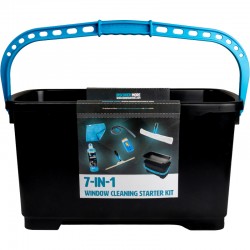
Get streak-free results every time with professional squeegees, replacement rubbers, channels, and accessories....

Window Cleaning Equipment & Tools - Cleaning Products



 Poles
up to 60ft
Poles
up to 60ft




















































Choosing the right water-fed pole (WFP) is one of the biggest decisions in modern professional window cleaning. The correct pole helps you work faster, stay safer, and clean higher without ladders, while also reducing fatigue and long-term strain. Below is an easy-to-follow guide explaining types of poles, materials, components, and common issues, so you can confidently choose the right equipment.
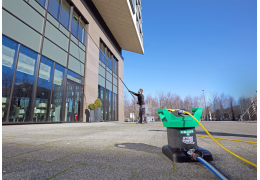
A Water Fed Pole (WFP) is a professional window cleaning system that lets you work safely from the ground by pumping pure water through tubing inside or outside the pole to a brush head at the top. This setup removes the need for detergents or ladders and, when used correctly, delivers streak-free, chemical-free cleaning on windows, frames, cladding, signage, fascias, solar panels and conservatory roofs. Explore our full collection here: Water Fed Poles.
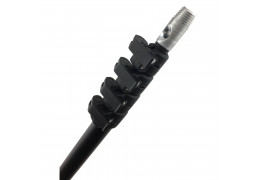
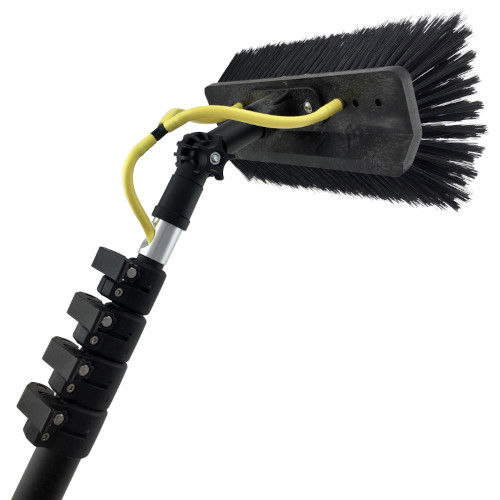
A telescopic pole is made up of several sliding sections that extend or retract to reach different working heights. The top section (Section 1) is the smallest diameter and slides into Section 2, which slides into Section 3 and so on, allowing the pole to lengthen or shorten as required. Each section is held firmly in place by clamps that stop the sections from slipping during use. This sliding construction is what makes telescopic poles different from modular poles, which use individual add-on sections that connect together rather than sliding inside each other. Modular Poles. A Telescopic pole is made up of several sections that can be slid into each other to lengthen or shorten the working height of the pole. The top section (section 1) is a smallest in diameter and slides into the next one, section 2, which in turn slides into section 3 and so on. To stop the sections sliding when working with the pole there are clamps .
The brush is the cleaning head that makes direct contact with the window and frames, delivering the pure water and scrubbing action. Brushes vary in size, weight, bristle type and jet configuration, which affects speed and finish quality. Browse our selection here: WFP Brushes.
A gooseneck (or angle adapter) fits between the pole and the brush. It gives better reach for setback windows, conservatory roofs, commercial frames and solar panels. Options include fixed metal goosenecks and adjustable plastic angle adapters.
Pole tubing is a small, flexible hose that runs up the pole to supply water to the brush head. High-quality tubing should be kink-resistant, flexible in cold weather, and lightweight to avoid snagging or flow restriction. Upgrading tubing often improves flow performance and ease of use.
The connector sits at the bottom of the pole tubing and allows quick attachment to your hose line or van-mounted system. Different cleaners prefer different connector types (e.g., rectus, push-fit). Choose the correct connector to match your existing system. Browse options here: WFP Connectors & Fittings.
Understanding pole material is key to choosing a pole that balances weight, strength, height, budget, and comfort. Pole performance depends largely on its material. Each offers a different balance of weight, stiffness, height capability and price.
| Material | Weight | Stiffness | Price | Recommended Max Height |
|---|---|---|---|---|
| Aluminium | Very Heavy | Very High | £ (entry-level) | Up to approx. 25ft |
| Fibreglass | Heavy | Low | ££ | Up to approx. 30ft |
| Hybrid (Part-Carbon) | Medium | Medium | £££ | Up to approx. 35ft |
| Carbon Fibre | Light | Medium-High | ££££ | Up to approx. 60ft |
| Hi-Mod Carbon | Very Light | High | £££££ | Up to approx. 70ft |
| Ultra Hi-Mod Carbon | Ultra Light | Very High | ££££££ | Up to approx. 80ft |
Aluminium is a strong metal used to manufacture many entry-level poles. However, aluminium is generally the heaviest and most flexible material used in WFP poles. It can feel cold during winter and may rattle slightly due to the clearance gap needed for sliding sections. Aluminium poles may dent or bend if struck against walls, gutters or sills. The only WFP aluminium poles we sell are the Unger nLite Connect poles. Recommended height use: up to approximately 25ft.
Fibreglass (sometimes called 'glass fibre', 'glass' or shortened to 'GF') is produced by weaving extremely fine glass (yes, the window stuff!) strands into cloth and bonding them together. Fibreglass poles are heavy, affordable and flexible. They will not dent like metal but can split and may produce small splinters with wear. Recommended height use: up to approximately 27ft (30ft max).
Hybrid poles (also known as 'Part Carbon' or "Composite") combine carbon fibre and fibreglass in different blends. Our Spot-Lite Hybrid poles are a 50/50 mix that offers balanced weight, stiffness and value. Hybrid poles won’t dent but can split and develop fibres like fibreglass when worn. Recommended height use: up to approximately 35ft.
Carbon (sometimes shortened to 'CF' or known just as 'carbon') fibre poles are a professional grade option known for being lightweight, stiff and efficient at height. Carbon Fibre is, like fibreglass, a fibre material made into a cloth or woven into a pole. When you look closely at carbon poles you can often see this pattern and it's a good way to identify types of poles and materials. Until specialist grades became available, carbon was the top standard material. Carbon does not dent but can split and produce small fibres when worn. Recommended height use: up to approximately 60ft.
High Modulus Carbon (Hi-Mod) uses a higher grade carbon fibre for improved stiffness and reduced weight. These poles provide excellent control at height and are suited to regular commercial work. Recommended height use: up to approximately 70ft. Hi-Mod Carbon Fibre (full name is 'High Modulus Carbon') is a fibre material made into a cloth or woven into a pole. The 'Hi-Mod' comes from the special grade of carbon used in making them.
Ultra Hi-Mod is the premium, elite-grade carbon fibre option. It provides maximum rigidity with minimal weight, making it ideal for demanding high-reach professional work. For now the only ones we sell are the Unger nLite Connect poles. Recommended height use: up to approximately 80ft.
If a pole section begins slipping, it usually means the upper end of the section has worn down. The clamp cannot fully grip, causing movement. The most effective fixes are:
Clamps are the tightening components that lock each pole section in place. Every pole brand (Spot-Lite, Unger, X-Tel, nLite, OVA-8, etc.) uses unique clamp designs. They are usually not cross-compatible, so replacements must match the exact model. The clamps are the plastic parts at the top of each section of the pole, and that hold the section above them. They are fixed to the lower section and have a lever to allow them to be opened when the pole is being extended and closed when the pole is being used.
Qleen poles are a specialist modular pole system with sections that screw together. They are often used with rotating brushes for specialised applications.
Unger nLite Connect Poles combine the advantages of both telescopic and modular systems. The master pole is telescopic, and modular extensions can be added as needed. This allows flexible height control and reduces wear because you only use extensions when required.
To keep your water-fed pole performing at its best and prolong its lifespan, follow these maintenance steps:
Choosing the correct telescopic water-fed pole helps professional window cleaners work safer, faster and with less fatigue. The right material, height and component setup will maximise durability and cleaning efficiency. Proper care, storage and routine safety checks will protect your investment and ensure consistent performance.
 What Is DI Resin? A Clear Guide for Window Cleaners
Batteries & Chargers for Water-Fed Pole & Window Cleaning Systems
Reverse Osmosis (RO) for Window Cleaning – Complete Guide for UK Pure Water Systems
Window Cleaning Pump Troubleshooting Guide for Water-Fed Systems
Pump Controller Problems Explained – Troubleshooting Guide for Water-Fed Pole Systems
What Is DI Resin? A Clear Guide for Window Cleaners
Batteries & Chargers for Water-Fed Pole & Window Cleaning Systems
Reverse Osmosis (RO) for Window Cleaning – Complete Guide for UK Pure Water Systems
Window Cleaning Pump Troubleshooting Guide for Water-Fed Systems
Pump Controller Problems Explained – Troubleshooting Guide for Water-Fed Pole Systems