Get streak-free results every time with professional squeegees, replacement rubbers, channels, and accessories....

-
MenuBack
-
SECTIONS
-
-
-
-
SCRIMS & CLOTHES
-
-
-
Specials
-
-
-
WIDEST SELECTION - BEST BRANDS - BEST PRICESFREE NEXT DAY DELIVERY
OVER £70+VAT (UK Mainlands) -
-
-
-
-
-
-
HOSE ACCESSORIES
-
-
-
WATER FED POLES
-
-
-
RESIN & FILTERS
-
-
-
-
-
-
-
-
-
-
-
-
-
- Home
- Resin Hot
-
Poles
up to 60ft

-
BRANDS
-
- PRODUCTS Featured
- CLEARANCE Sale
-
IN LONDON
-
-
WHERE TO FIND US
-
WE SELL PURE WATERCall us on 0203 384 1428
-
-
-
TRADE COUNTER IN LONDON
-
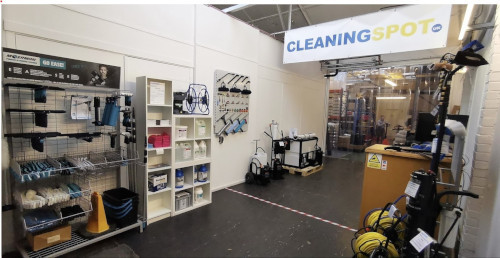
Come on visit our trade counter in South Wimbledon for your parts, repairs,, custom made installation and van mounted systems
-
-
-
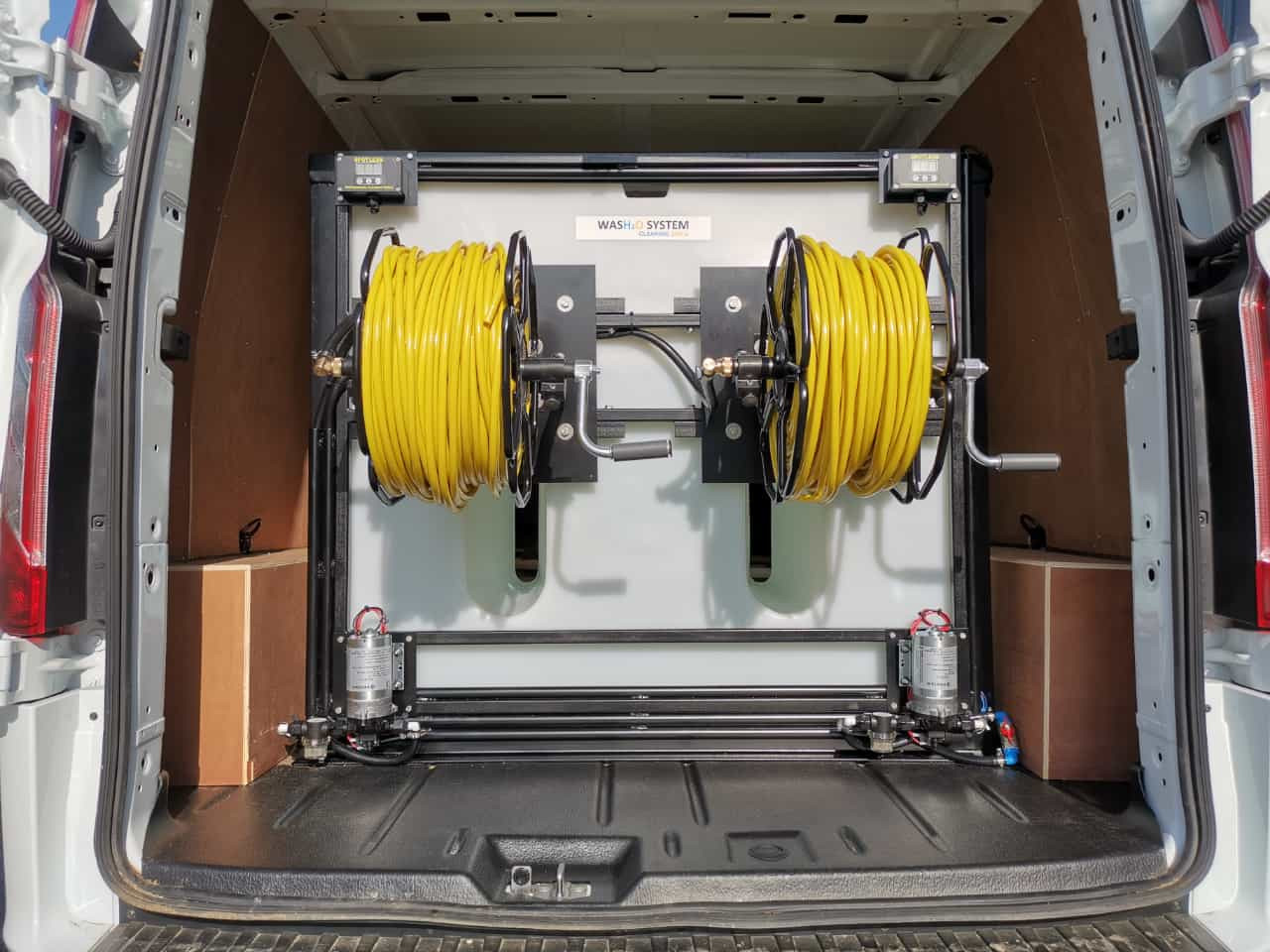
VAN MOUNTED SYSTEMS
-
-
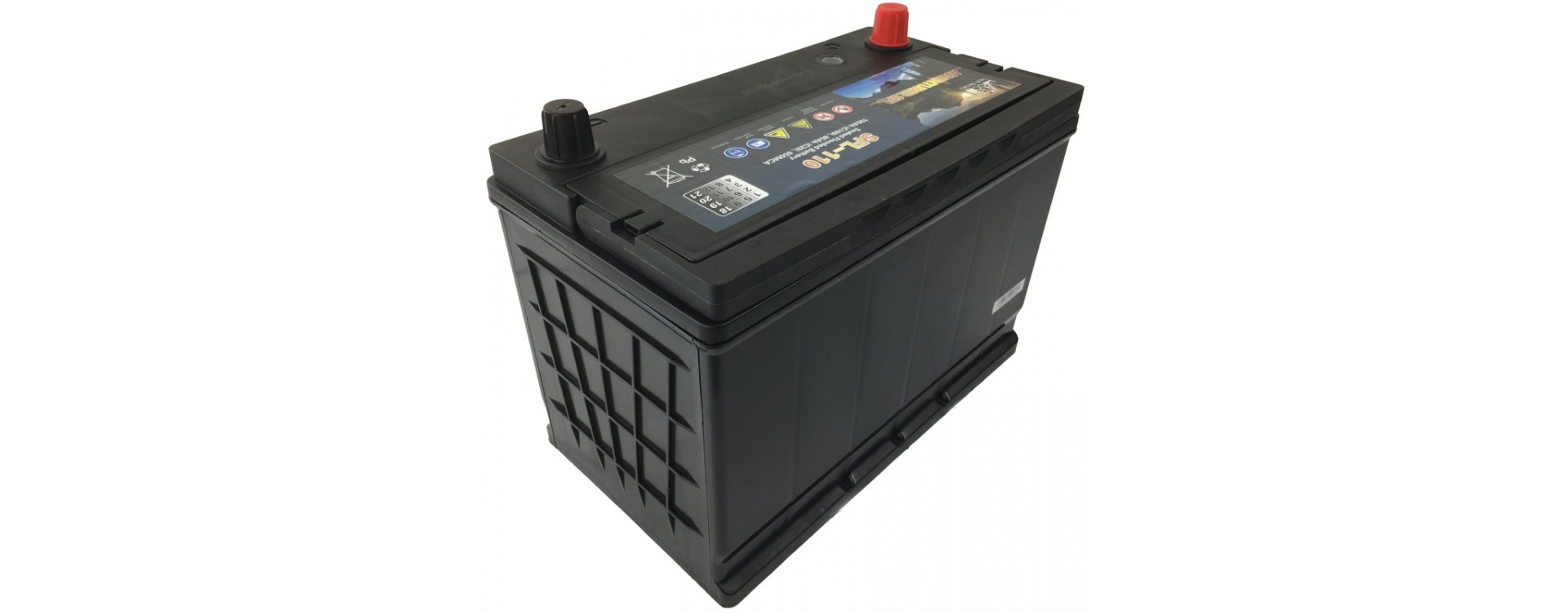
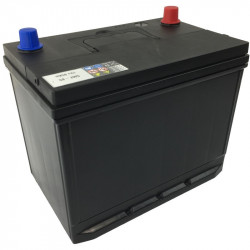
Batteries & Chargers for Water-Fed Pole & Window Cleaning Systems
Choosing the right battery and charger makes a huge difference to how reliably your water-fed pole system runs. A good power setup keeps your pump controller stable, prevents voltage-drop issues, and helps you work a full day without downtime. Below you’ll find clear explanations of the different battery types used in window cleaning systems, how they behave in winter, how to diagnose common charging issues, and how to pick the best setup for your van or trolley.
Battery Types Explained
Q: "What is a Leisure Battery?"
Q: "What is a Deep Cycle Battery?"
- Leisure batteries are deep cycle lead-acid batteries designed to release steady, low-level power over long periods rather than delivering a short, sharp burst of starting power like a car battery.
- They cope well when left for long periods between charges, making them ideal for window cleaning systems, pumps, controllers, and other low-energy professional equipment.

- Deep cycle batteries usually last longer than starter batteries when powering water-fed pole systems daily, especially when you work hard all day or push water through long hose runs and high-level poles.

- They provide a stable and reliable power source for demanding window cleaning setups and generally offer better long-term durability than standard automotive batteries.
Gel & Sealed Lead Acid Batteries
Q: "What is a Gel Battery?"
- Gel batteries are still lead-acid, but the electrolyte contains a thickened gel that won’t spill—even if the battery is tipped on its side—making them safer for portable trolleys or tight installations.
- They cannot deliver very high power bursts, so if your system demands a lot of pressure or height, a liquid lead-acid battery usually performs better. Always consider the safety requirements of your setup and trolley.
- Gel batteries charge quickly but often have a shorter lifespan compared to traditional lead-acid batteries.
Q: "What is a Sealed Lead Acid Battery?"
- Despite the name, most sealed lead-acid batteries are technically gel batteries, sometimes marketed as “maintenance free”.
Cold Weather Performance
Q: "Why does my battery not work in the winter?"
Q: "Why does my pump keep stopping in the winter?"
Q: "My battery won't charge in winter!"
- Batteries dislike cold temperatures. When cold, they accept less charge and release energy less efficiently, so performance drops noticeably compared to summer.
- The usable capacity (Amp Hours) falls as the temperature drops, which means less working time per charge.
- Pumps draw slightly more current in cold conditions as water becomes denser and harder to move, increasing strain on the system.
- All batteries self-discharge over time. Leaving a battery idle for weeks reduces charge, so connecting it to an intelligent charger helps extend its life.
- Charging more frequently in winter keeps the battery at maximum capacity and reduces pump-cutout problems.
Diagnosing Battery Problems
Q: "Is my battery dead?"
Q: "Do I need a new battery?"
- Sometimes a battery fails, but often the charger is the true problem. A faulty charger cannot deliver enough current, making the battery appear weak even when it’s not.
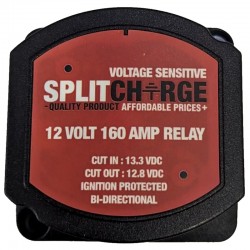
- Split-charge relays can give poor charging performance if they aren’t installed or functioning correctly.
Charging Problems & Intelligent Charger Issues
Q: "My gel battery is on charge, the charger shows green, but nothing works. Why?"
- Intelligent chargers expect a minimum voltage. If your battery drops extremely low (for example, 5V), the charger may not recognise it and will show a green light as if no battery is connected.
- This doesn’t always mean the battery is ruined. You can sometimes revive a flat battery using a non-intelligent charger such as a BC10 charger, which applies charge regardless of initial voltage.
- NOTE: Charging gel batteries on a non-intelligent charger requires care. Proceed at your own risk.
- If a battery became extremely flat, ask why. Most pump controllers show a low-battery warning and will shut down automatically. If this function is disabled, the battery may over-discharge without warning.
Battery Maintenance & Charging Habits
Q: "Should I run the battery down completely before charging?"
- In theory, deep cycle batteries benefit from using most of their charge across the 10.5V–13V range. In reality, most window cleaners must recharge daily to ensure enough power for the next day.
- Split-charge relays rarely give as much charge as users expect, especially in short-run urban driving.
Q: "Do I need to top up my leisure battery with deionised water?"
- No. Modern leisure batteries are sealed. Do not open or refill them, and avoid overcharging which can cause gassing.
Voltage & Performance Issues
Q: "How do I check my battery voltage?"
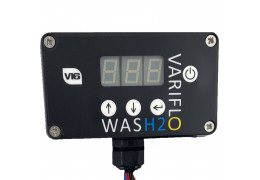
- All Spotless Digital and Analogue controllers include a voltage display. Select it on the menu to check your battery state.
- If your controller doesn’t display voltage, you’ll need a standalone voltmeter.
Q: "My battery is charged but the controller keeps cutting out"
- Voltage at the pump controller may be lower than the battery voltage due to cable thickness, connections, and voltage drop under load.
- To get a true reading, measure the battery voltage while the pump runs at full pressure.
Q: "How low can my battery voltage get?"
- A battery becomes permanently damaged below 10.5V. For this reason, controllers shut off automatically at this point to protect the battery.
- Some controllers allow users to disable low-voltage shutoff, but doing so risks serious battery damage.
Q: "My battery shows 12V but still runs out quickly"
- Voltage (V) is not capacity. Amp Hours (Ah) determines how long your battery lasts. A 110Ah battery provides far more working time than an 85Ah or 22Ah battery even though all show 12V when full.
- Higher Ah = longer runtime. Examples: 110Ah, 85Ah, 22Ah.
Q: "My bigger battery takes ages to charge"
- Larger Ah batteries take longer to recharge with the same charger. Either upgrade your charger or allow more time. Slow charging is better for battery life.
Split-Charge Systems & SFC7 Controllers
Q: "Do I need a split charge relay?"
- Split-charge relays top up your system battery using the van’s alternator while you drive. If you drive long distances every day, they can help. If you work in towns with short journeys, they often don’t charge enough.
Q: "Does the SFC7 controller include a built-in split charge relay?"
- Yes. The SFC7 activates charging when the engine runs and stops charging when the engine stops, working just like a traditional split-charge relay.
Q: "Do I need the engine running to use the SFC7?"
- No, unless your battery is extremely flat. In that case, the alternator will temporarily power the system.
Conclusion
A reliable battery and charger setup keeps your water-fed pole system running smoothly, reduces downtime, and protects your pump controller from voltage-related faults. Whether you choose a leisure battery, gel battery, or sealed lead-acid battery, matching it with the right charger and maintaining good charging habits will give you consistent all-year performance. If you work hard every day or use long hose lengths, upgrading to a higher-Ah battery or a more powerful charger often gives the biggest improvement.
Related products
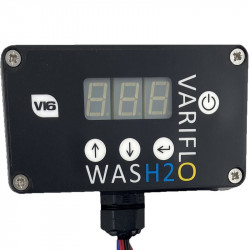
Digital Variflo+ V16 pump controller - Charger
Related posts
What Is DI Resin? A Clear Guide for Window Cleaners
Reverse Osmosis (RO) for Window Cleaning – Complete Guide for UK Pure Water Systems
Window Cleaning Pump Troubleshooting Guide for Water-Fed Systems
Pump Controller Problems Explained – Troubleshooting Guide for Water-Fed Pole Systems
Cold Weather Window Cleaning: Essential Winter Tips for Water-Fed Pole Users
Recently Viewed Products
Subscribe to our Newsletter
Sign up today for exclusive offers. No spam, never. Subscribe our newsletter today!